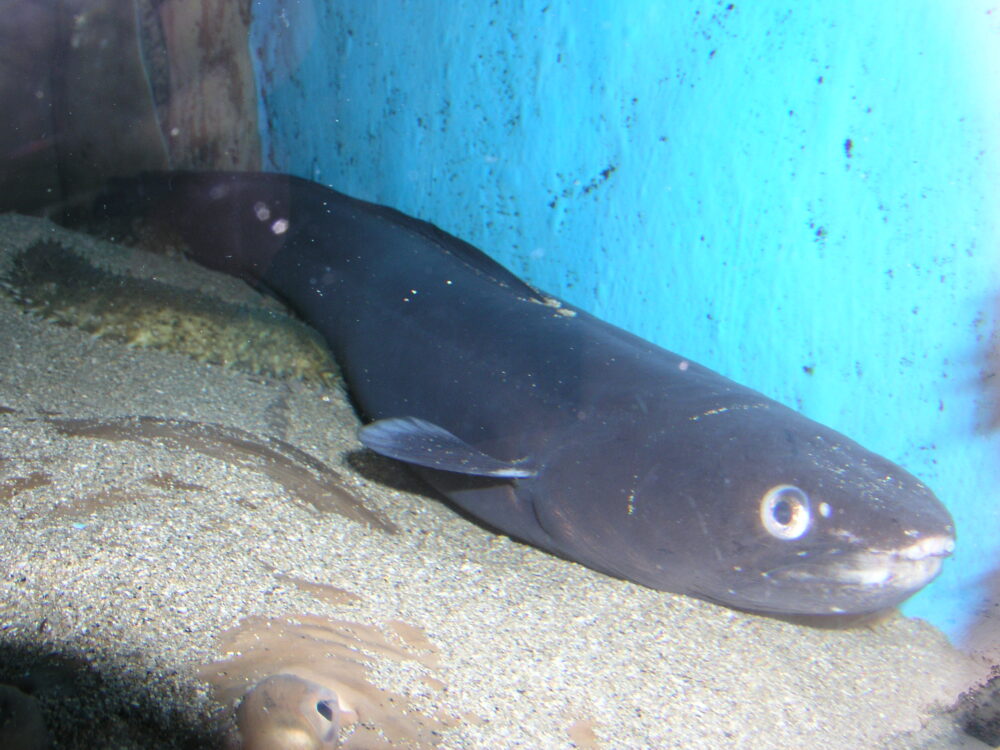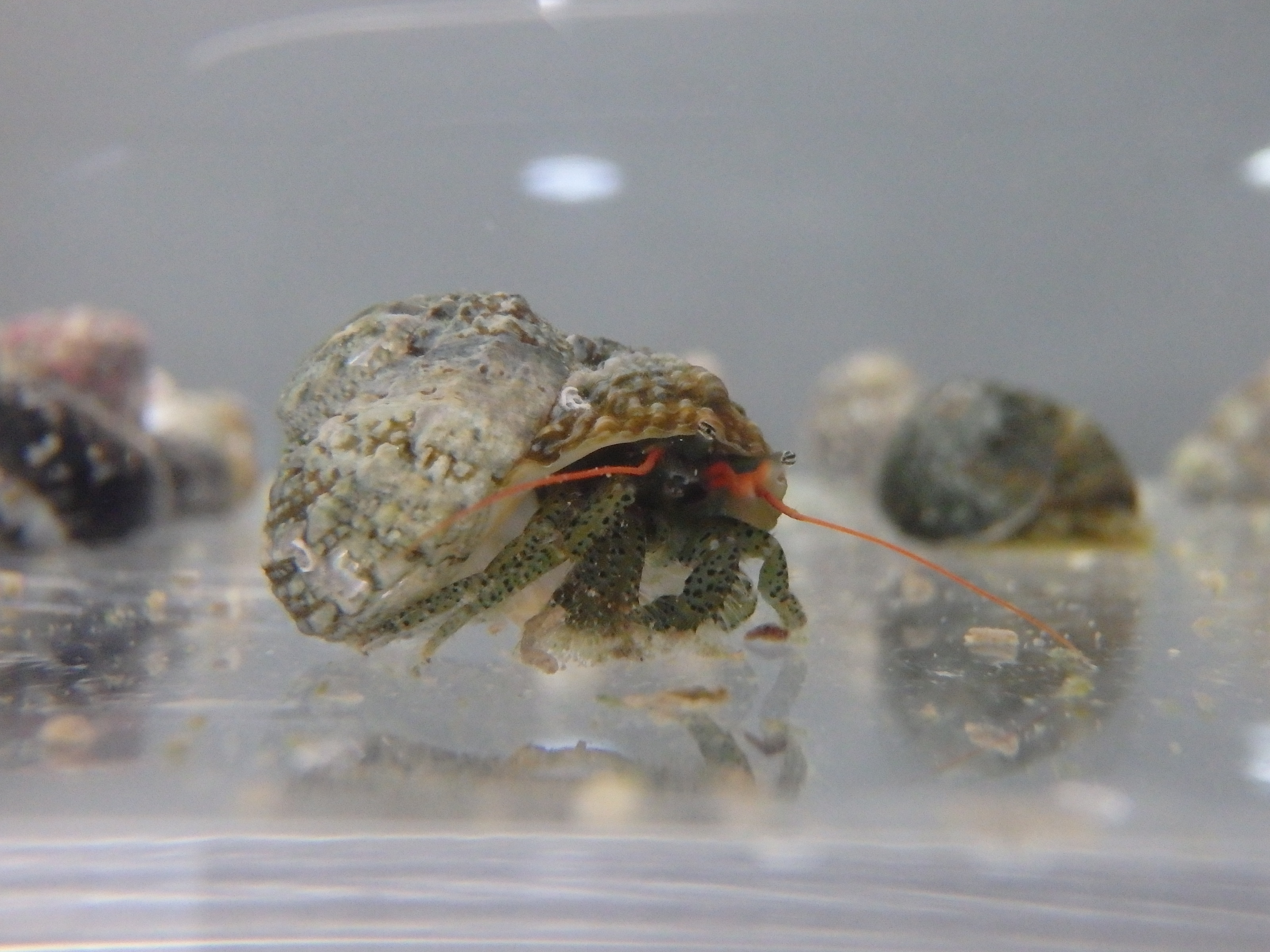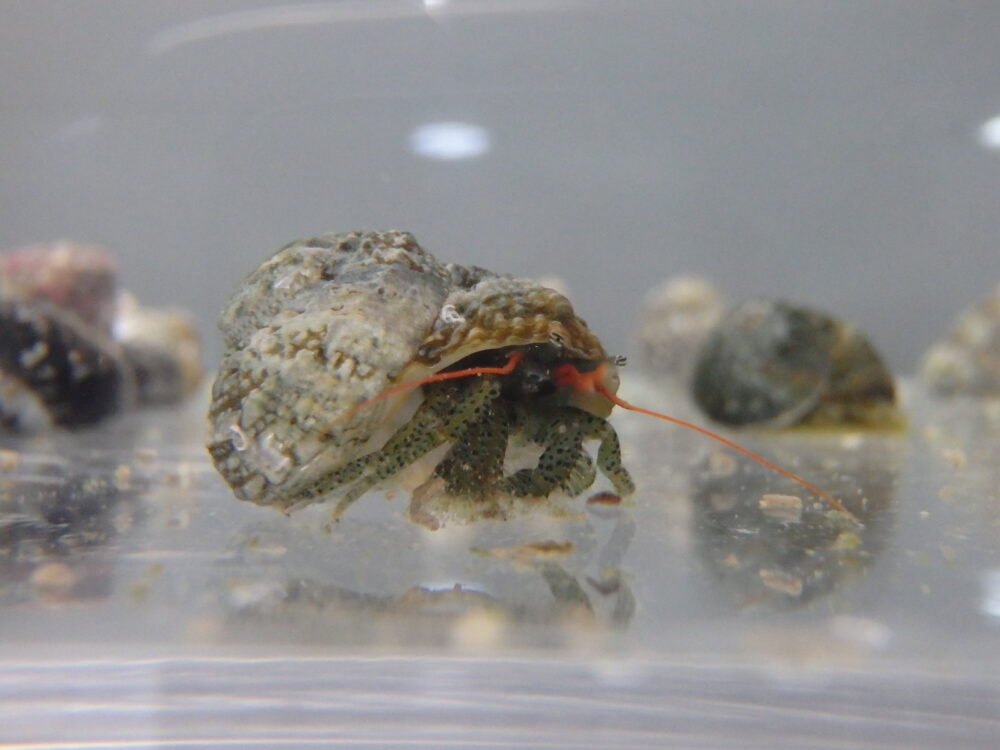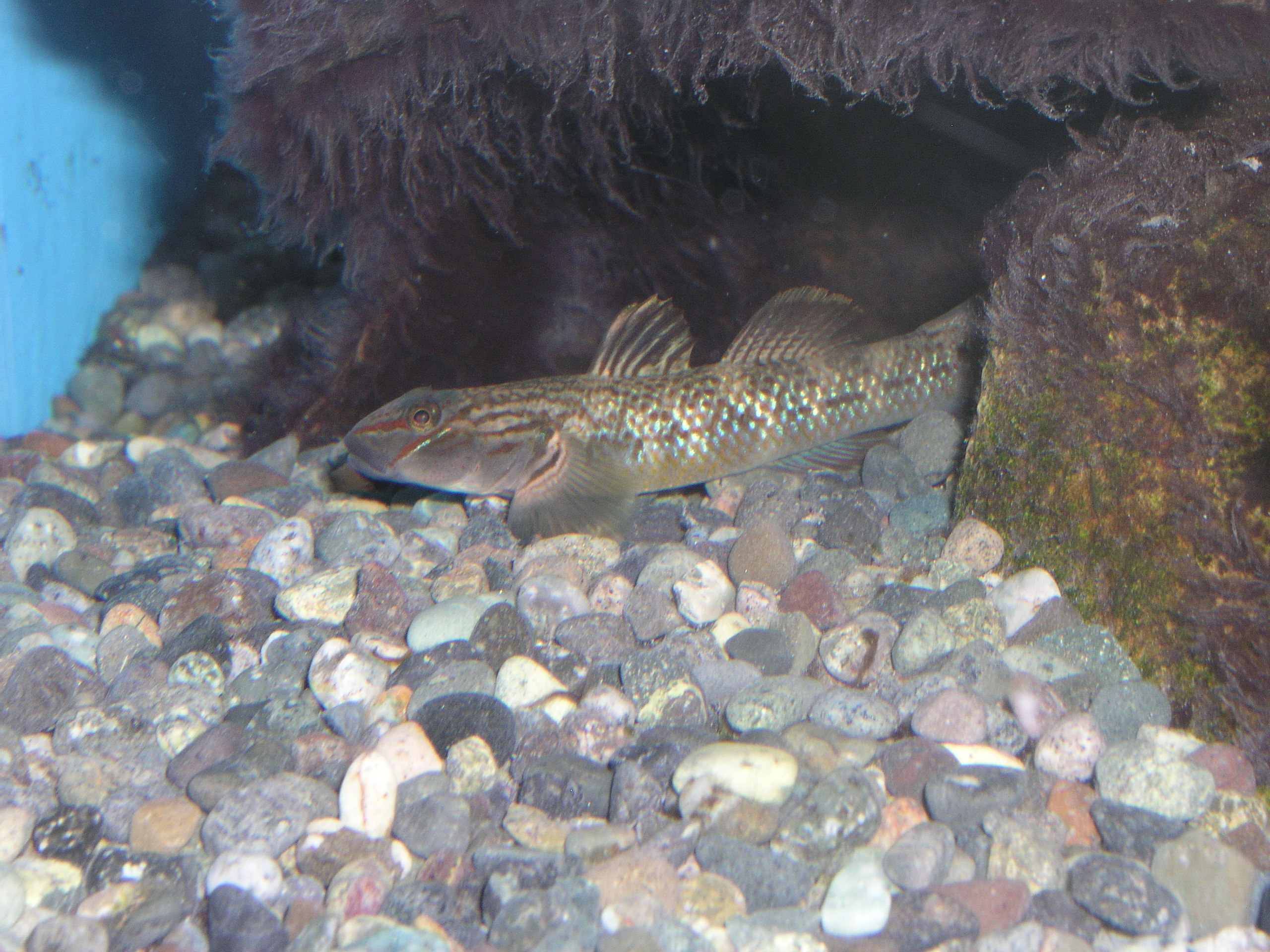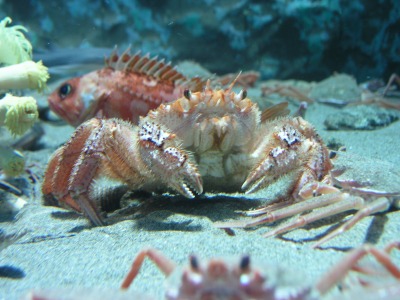
分類:節足動物門 軟甲綱 十脚目 ガザミ科 ガザミ属
庄内での呼び名:わだりがに、なづおどご(夏に獲れる♂)
学名:Portunus trituberculatus
英名:Swimming crab, Japanese blue crab
漢字:蝤蛑
甲幅:~15cm
北海道~九州に分布、波が穏やかな湾内の水深30m程までの砂泥底に生息する。一番後ろの板状の脚を遊泳脚といい、これを使って泳ぐ。特に夜間群れをなして泳いで移動することから「ワタリガニ」と呼ばれている。

分類:刺胞動物門 ヒドロ虫綱 淡水クラゲ目 ハナガサクラゲ科 カギノテクラゲ属
学名:Gonionemus vertens
英名:Clinging jellyfish
漢字:鉤手水母
傘径:~2cm
庄内浜では6~7月に毎年見ることができる。
ホンダワラ属の海草に付着生活し、あまり泳ぎ回らない。
触手の先端部分が鉤状に曲がっていることが名前の由来。
刺胞の毒は強力で、加茂水族館の館長が刺されて40度の高熱とインフルエンザに似た症状がでた。
3日入院し完治するまで10日を要した。
庄内では「ちゃぶ台=飯台」に似ていることから、「バンデムシ」と呼ばれ恐れられている。
At Shonai Beach in front of Kamo Aquarium, they can be seen every year from June to July.
They attach themselves to seaweed and do not swim around much.
The name originates from the hook-like curvature at the tips of their tentacles.
Their nematocyst venom is potent; the director of Kamo Aquarium was stung, resulting in a high fever of 40°C and flu-like symptoms.He was hospitalized for three days and required ten days to fully recover.
In Shōnai, they are feared and called “bandemushi” because they resemble a “chabudai” (low dining table).
※盗用防止のため、写真に当館のロゴの透かしを入れてあります。ご了承ください。
※To prevent unauthorized use, our aquarium logo has been watermarked onto the photographs. We appreciate your understanding.

分類:軟体動物門 頭足綱 八腕形目 カイダコ科 アオイガイ属
学名:Argonauta argo
英名:Paper nautilus, Greater argonaut
漢字:葵貝
殻長:~27cm
全世界の温・熱帯海域に分布、日本近海では太平洋・日本海側の暖海域で見られる。表層浮遊性。貝ではなく、殻をもったタコの仲間である。殻は白く、縁の部分が黒い。大きいものは25cmを超える。殻をもつのはメスだけで、一対の先端が扇状に拡がった腕から殻の成分を分泌して殻を作る。少しの損傷なら修理できる。この殻を2つ並べると植物の「葵」の葉のように見えることが名前の由来である。オスは殻がなくて小さく、メスの5分の1程度の大きさしかない。別名「カイダコ」

分類:刺胞動物門 ヒドロ虫綱 軟クラゲ目 オワンクラゲ科 オワンクラゲ属
学名:Aequorea coerulescens
英名:Crystal jelly
漢字:御椀水母
傘径:~20cm
庄内浜では3~6月に多く出現する。傘の中央にある口を大きく開き小型のクラゲ類や小さなアミ類などを食べる。
発光するクラゲとして知られていて、刺激を与えたり紫外線を当てたりすると傘の縁が緑色に光る。
ノーベル化学賞を受賞した故・下村脩博士が研究に用いていたのは、アメリカ太平洋岸に分布する別種のオワンクラゲ(Aequorea victoria)で、このオワンクラゲからイクオリンとGFP(緑色蛍光タンパク質)という発光物質が発見されている。イクオリンはカルシウムイオンの測定試薬として、GFPはその遺伝子を目的の遺伝子につないで発現させることで、細胞内での蛍光マーカーとして利用されている。
Shonai Beach in front of Kamo Aquarium sees frequent appearances from March to June.
They open their large mouths at the center of their bell to feed on small jellyfish and tiny crustaceans.
Known as luminous jellyfish, their bell edges glow green when stimulated or exposed to ultraviolet light.
The jellyfish used in research by the late Dr. Osamu Shimomura, winner of the Nobel Prize in Chemistry, was a different species, the Pacific Aequorea victoria, found along the American Pacific coast.
From this jellyfish, the luminescent substances eguorin and GFP (Green Fluorescent Protein) were discovered.
Aequorin is used as a calcium ion indicator, while GFP is utilized as a fluorescent marker within cells by linking its gene to the target gene for expression.
※盗用防止のため、写真に当館のロゴの透かしを入れてあります。ご了承ください。
※To prevent unauthorized use, our aquarium logo has been watermarked onto the photographs. We appreciate your understanding.

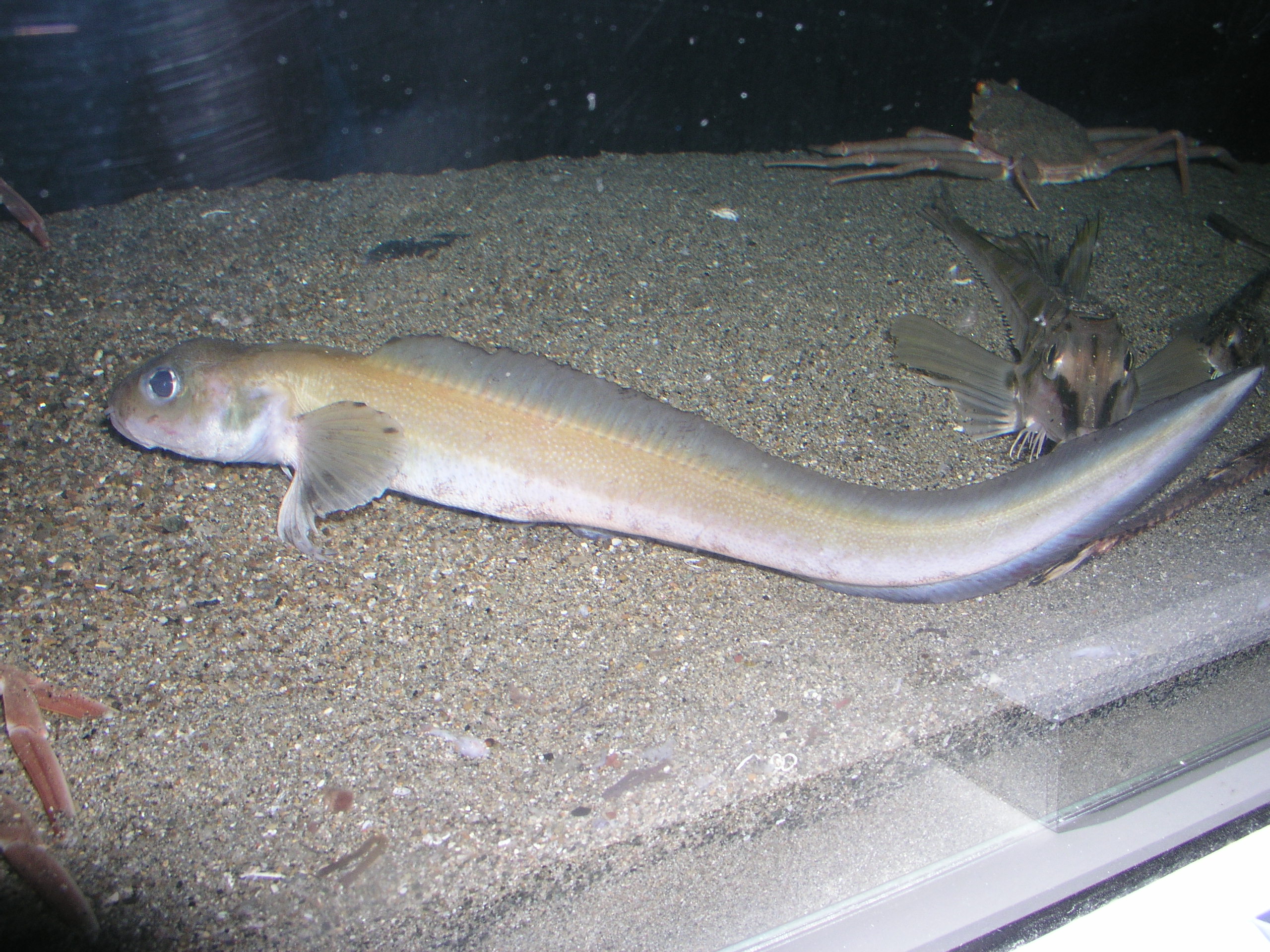
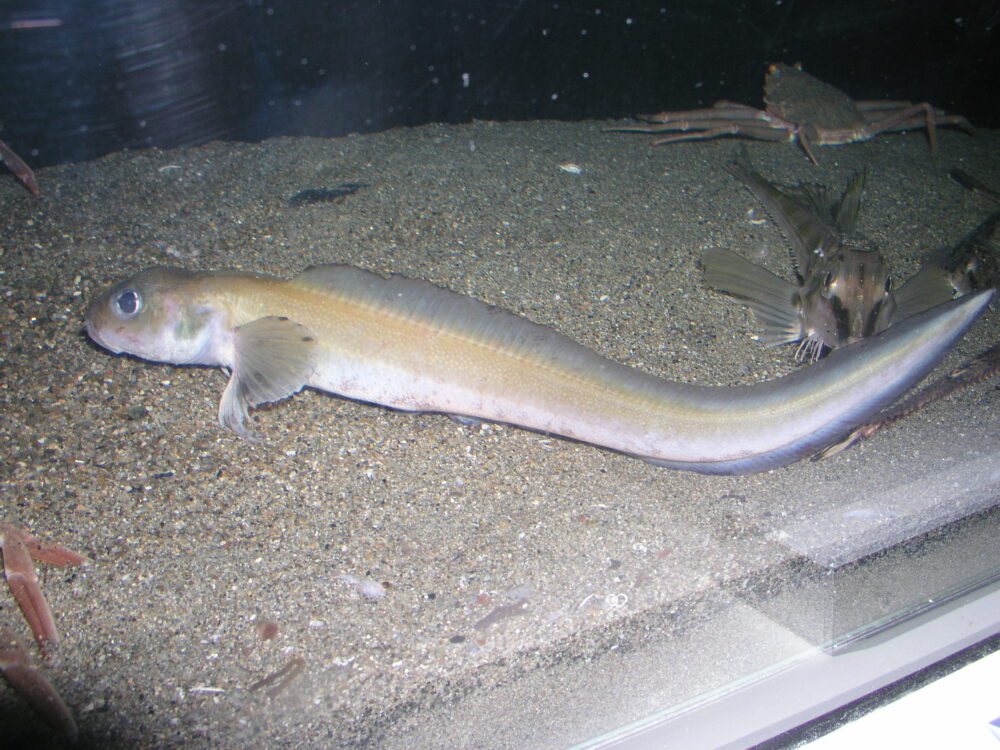
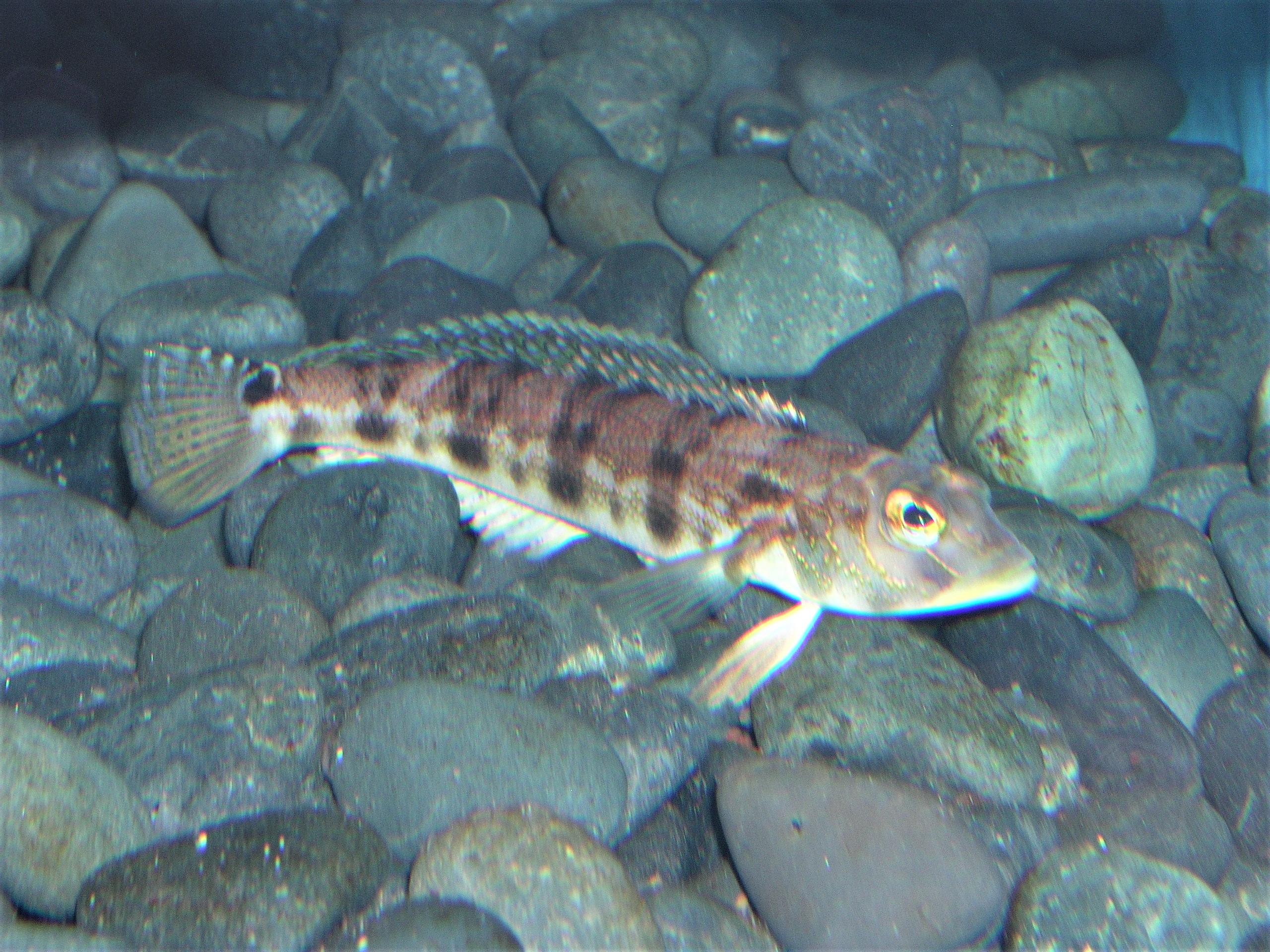
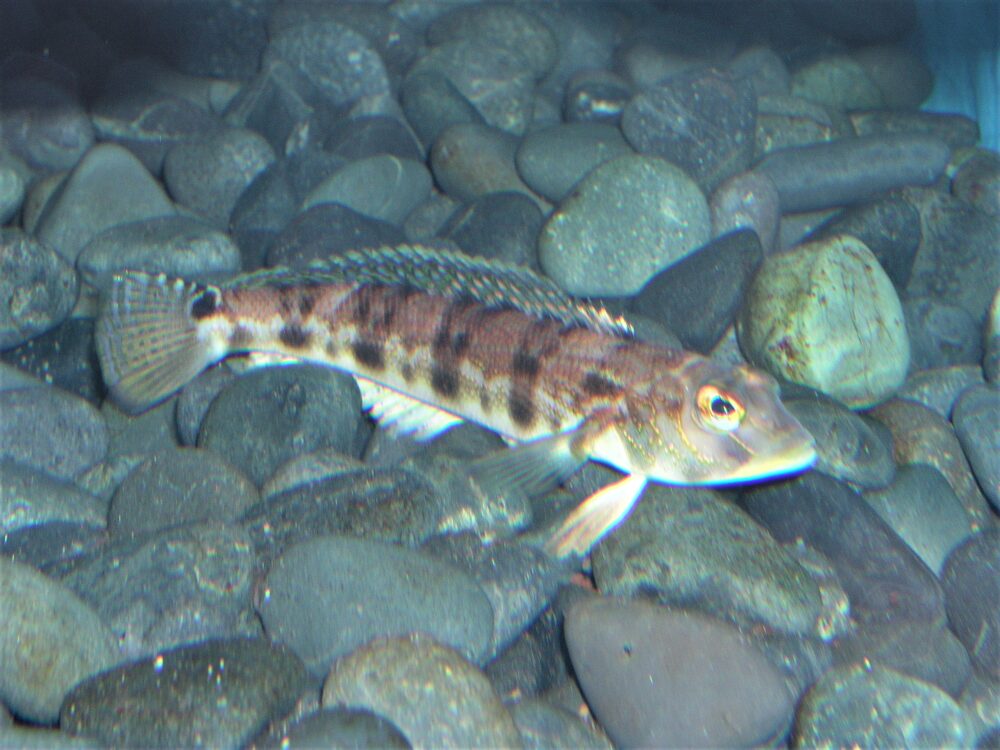
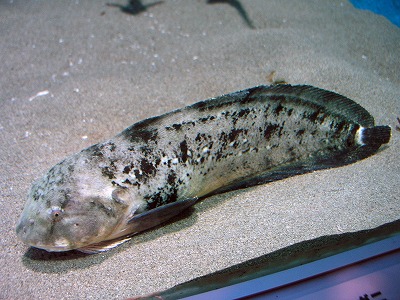
分類:脊索動物門 条鰭綱 カサゴ目 トクビレ科 オニシャチウオ属
学名:Tilesina gibbosa
英名:-
漢字:-
体長:~30cm
宮城県以北の太平洋岸・島根県以北の日本海岸に分布、水深40~170mの砂泥底に生息する。トクビレに似ているが、下顎の先端にヒゲがないこと、上顎より下顎が前に突き出ていることで区別できる。上顎後端に1対の短いヒゲがある。
分類:刺胞動物門 鉢虫綱 旗口クラゲ目 オキクラゲ科 オキクラゲ属
学名:Pelagia noctiluca
英名:Purple jellyfish
漢字:沖水母
傘径:~10cm
世界の暖かい海に生息しているクラゲで、鉢水母の仲間では珍しくポリプ世代がない。受精卵からプラヌラに変態し、プラヌラから直接水母に変態する。刺激を与えると発光することが知られている。
This species inhabits warm oceans around the world and, unusually for a member of the Scyphozoa, lacks a polyp stage.
It metamorphoses from a fertilized egg into a planula, and then directly from the planula into a jellyfish. It is known to bioluminesce when stimulated.
※盗用防止のため、写真に当館のロゴの透かしを入れてあります。ご了承ください。
※To prevent unauthorized use, our aquarium logo has been watermarked onto the photographs. We appreciate your understanding.