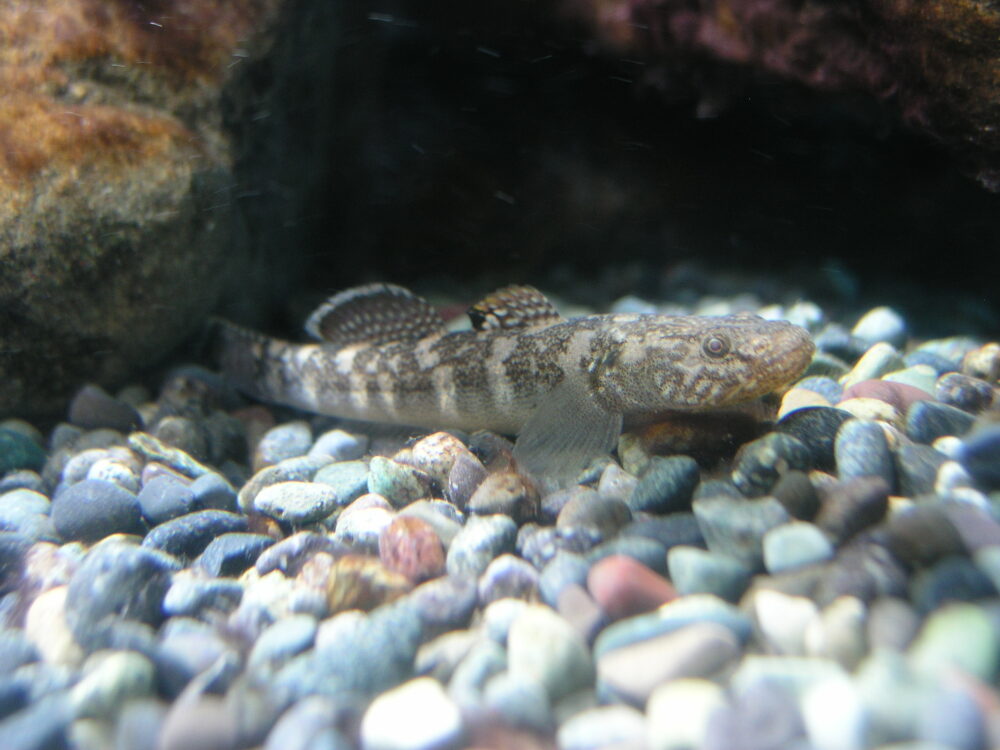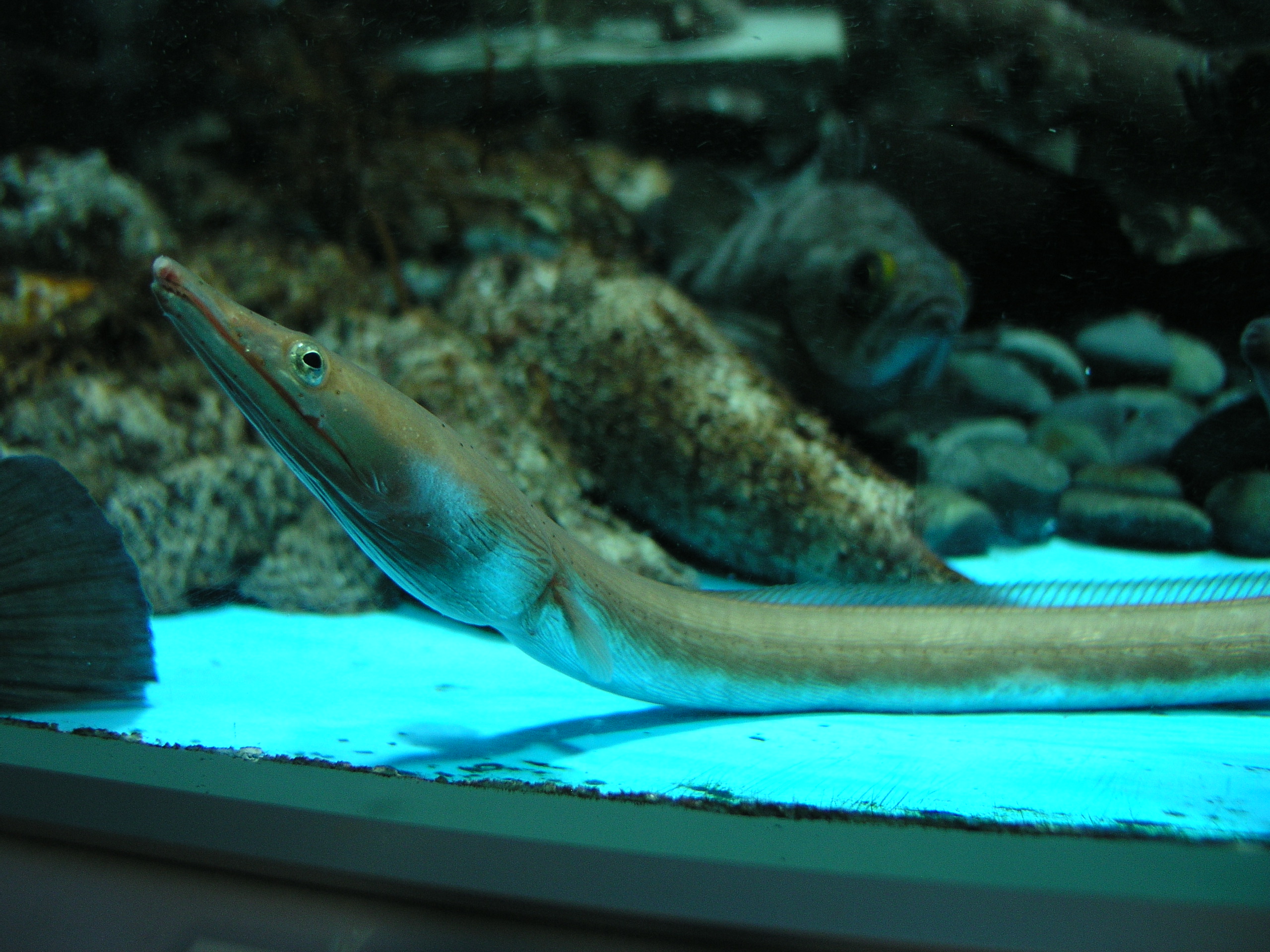
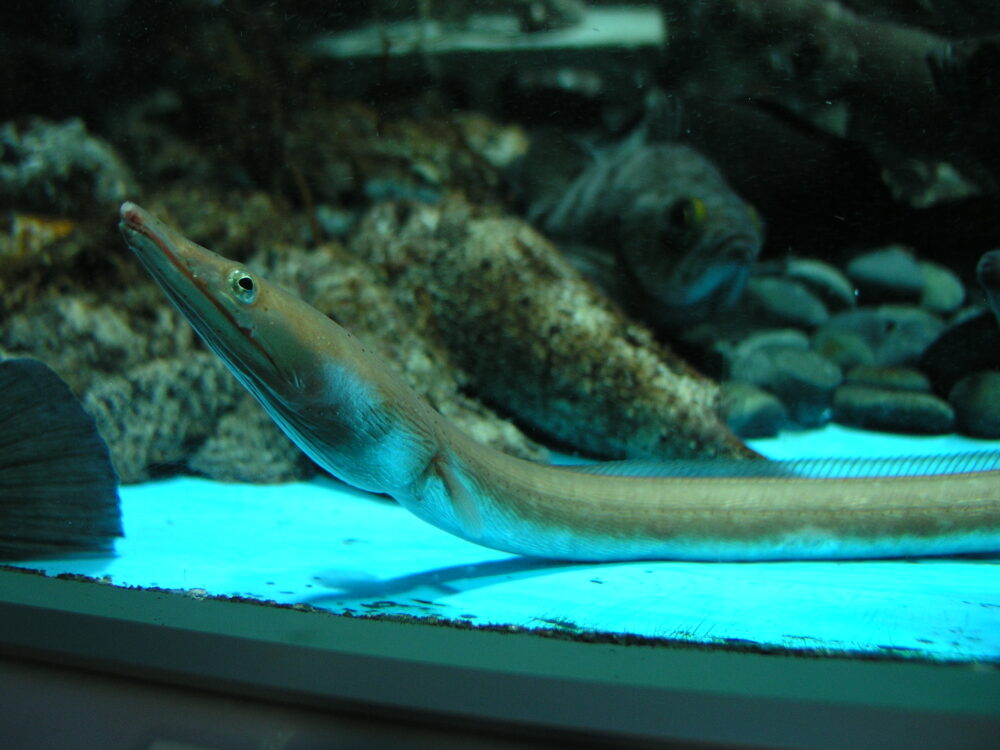
分類:脊索動物門 条鰭綱 ウナギ目 ウミヘビ科 ダイナンウミヘビ属
庄内での呼び名:-
学名:Ophisurus macrorhynchos
英名:Longbill snake
漢字:大灘海蛇
体長:~1.4m
南日本に分布、内湾の浅所から水深500m位までの砂泥底に生息する。「ウミヘビ」と名前がつくが、ヘビの仲間ではなくウナギの仲間である。体形は非常に細長い。夜行性で、昼間は砂に潜り顔だけ覗かせている姿もよく見られる。
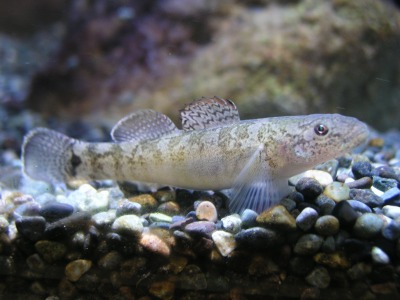
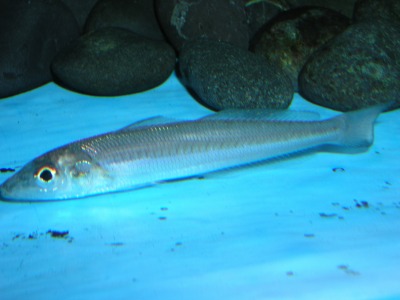
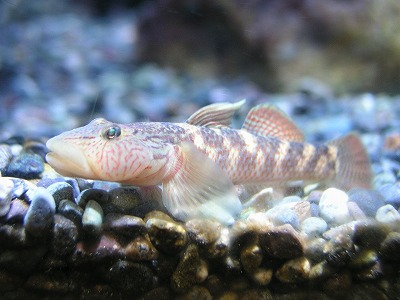
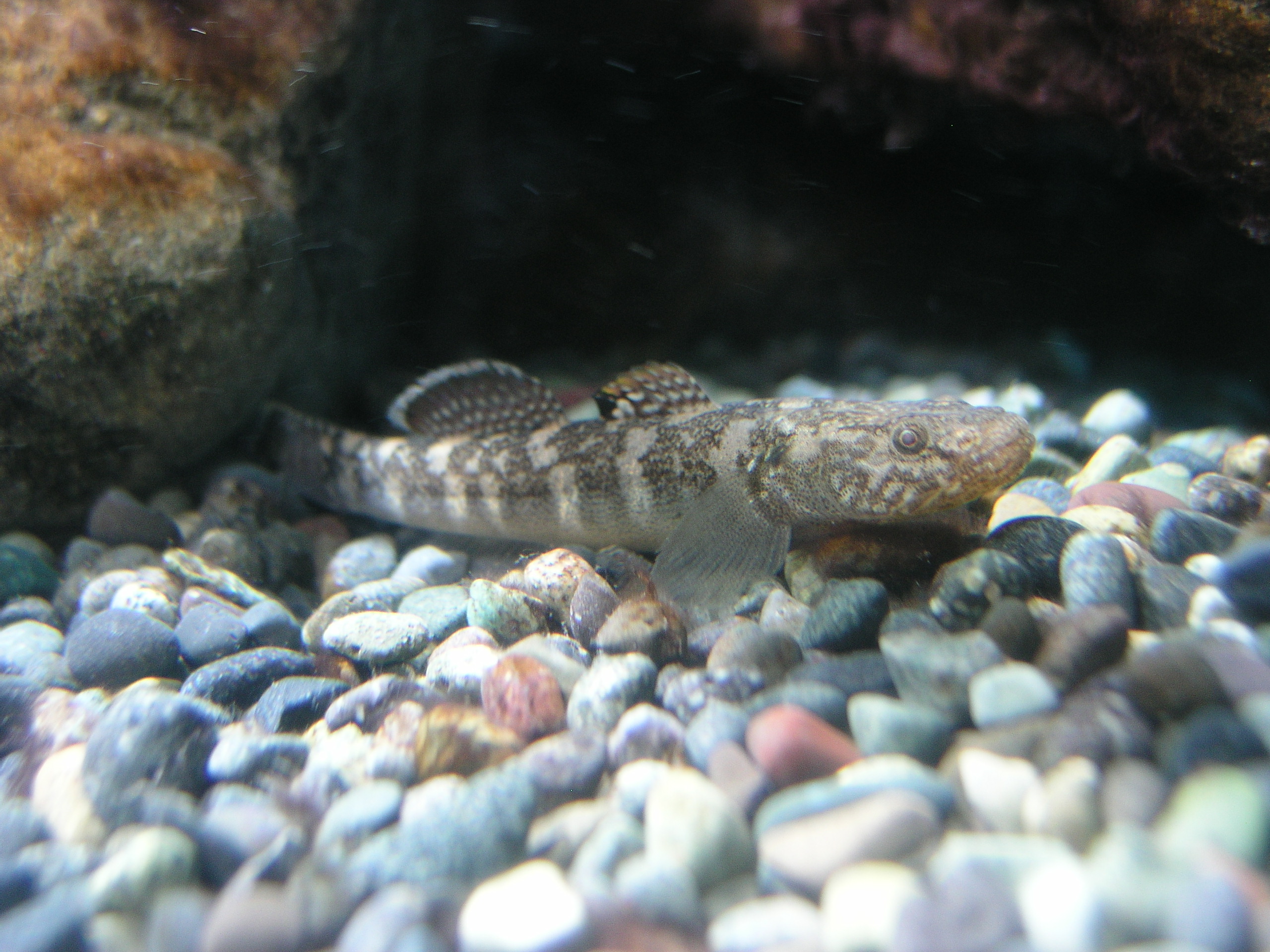
分類:脊索動物門 条鰭綱 スズキ目 ハゼ科 ウキゴリ属
学名:Gymnogobius petschiliensis
英名:Floating goby
漢字:墨浮鮴
体長:~10cm
北海道日高地方~屋久島に分布、河川下流域から河口域に生息する。近縁種に「ウキゴリ」「シマウキゴリ」といるが、本種は第1背びれ後端に黒色斑がないことが特徴。ウキゴリという名前は「浮いているゴリ(ハゼの俗称)」からきている。
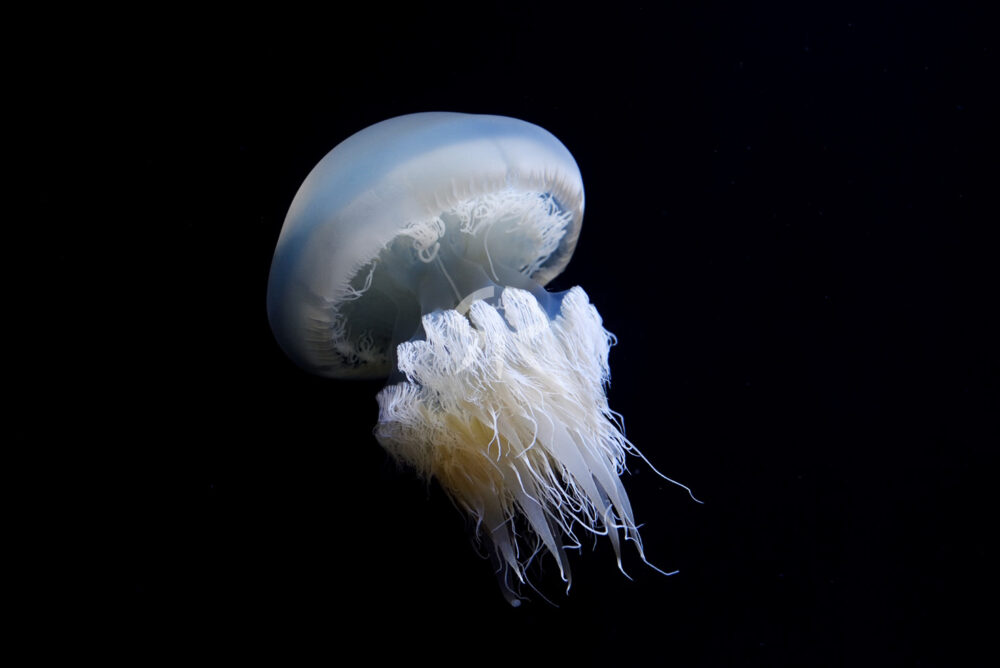
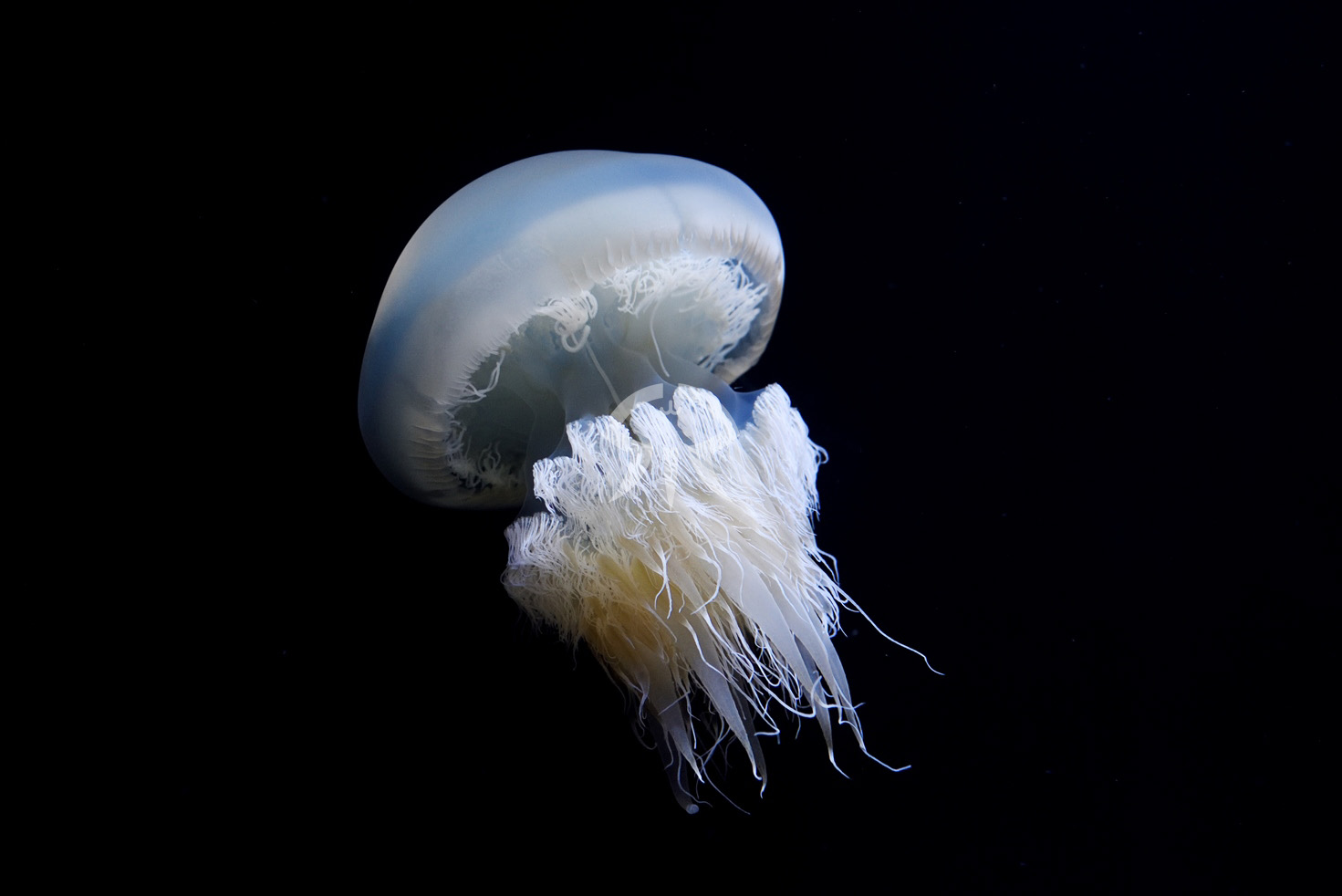
分類:刺胞動物門 鉢虫綱 根口クラゲ目 ビゼンクラゲ科 ビゼンクラゲ属
学名:Rhopilema asamushi
英名:-
漢字:備前水母
傘径:~50cm
庄内浜では夏~晩秋に出現し、夕方ごろになって突然多数が泳いでいるのを見ることがある。野生個体は青みがかった色をしており、庄内では「あおだんご(青団子)」とも呼ばれるが、水槽に入れて飼育していると段々と色が薄くなっていく。繁殖個体は大きくなっても青みを帯びることがなく、今後の課題でもある。
成熟した野生個体は、光の刺激で一斉に放精放卵を行うため、朝に水槽の照明を付けた後、飼育水が白く濁ることがある。以前はスナイロクラゲと呼ばれていた。
At Shonai Beach in front of Kamo Aquarium, this species appears from summer to late autumn. Around dusk, you may suddenly see large numbers swimming. Wild specimens have a bluish coloration and are called “aodango” (blue dumplings) in Shonai. However, when kept in aquariums, their color gradually fades. Breeding specimens never develop a bluish tint even when fully grown, which remains a challenge for the future.
Mature wild specimens synchronously release sperm and eggs in response to light stimulation, so after turning on the tank lights in the morning, the aquarium water may become cloudy white.
They were previously called Snairo kurage (Its mean Sand color jellyfish).
※盗用防止のため、写真に当館のロゴの透かしを入れてあります。ご了承ください。
※To prevent unauthorized use, our museum logo has been watermarked onto the photographs. We appreciate your understanding.
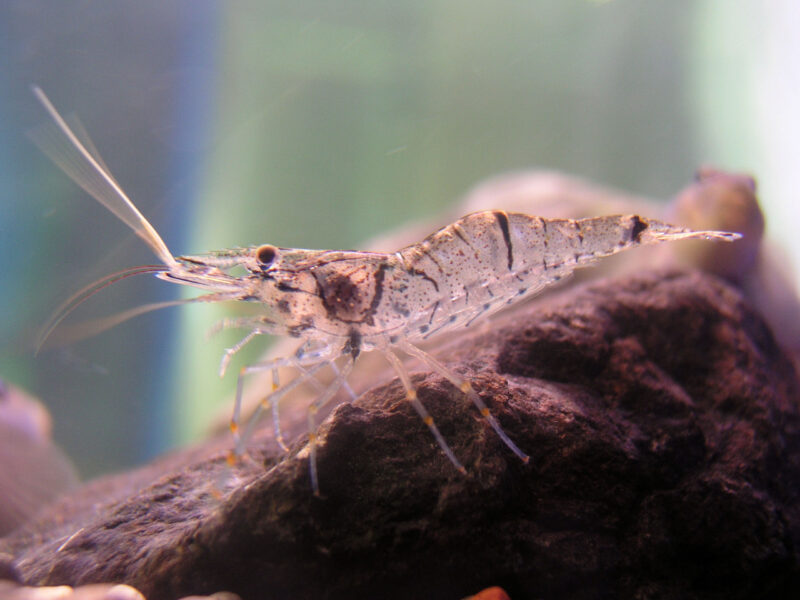
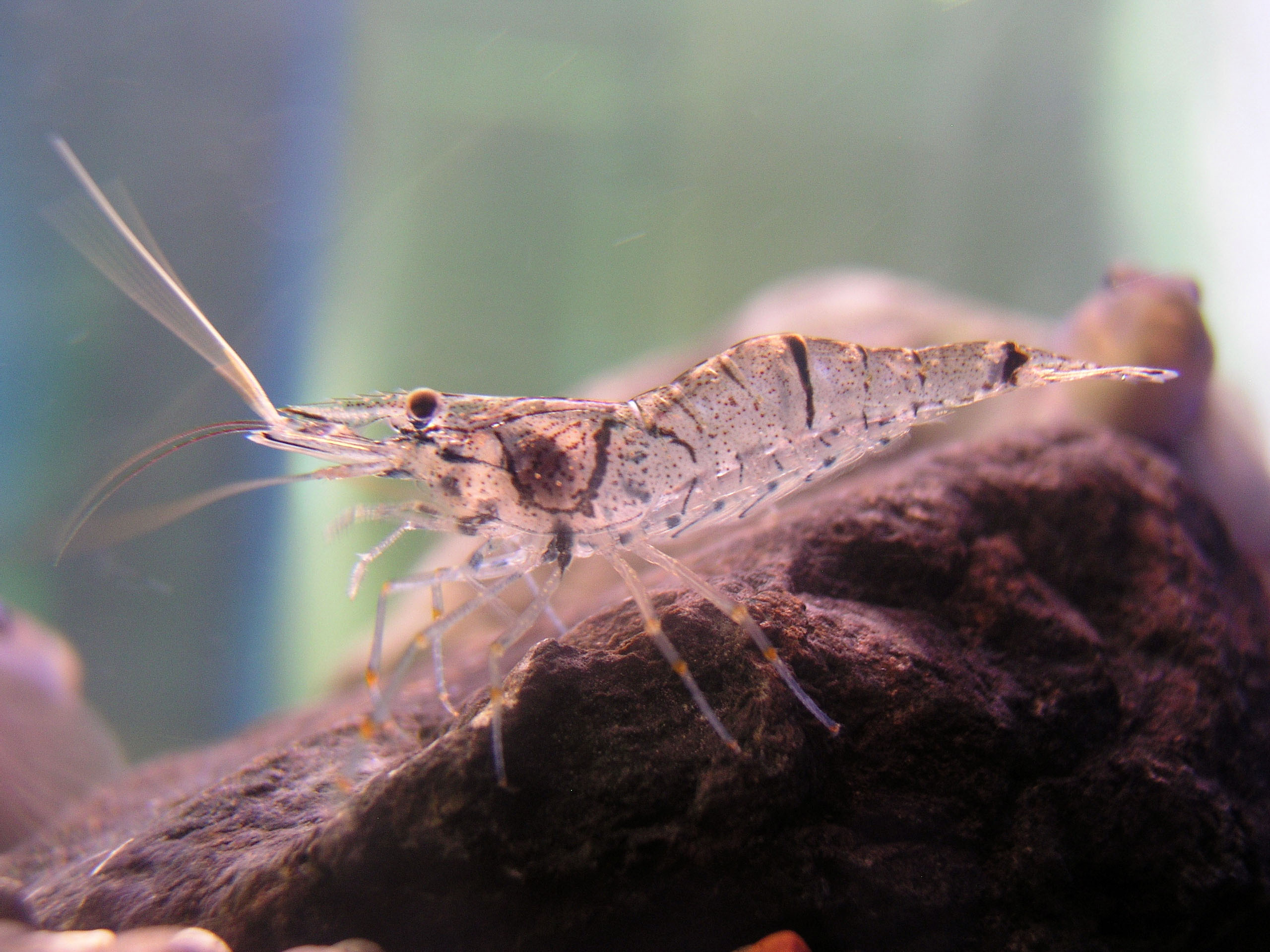
分類:節足動物門 軟甲綱 十脚目 テナガエビ科 スジエビ属
学名:Palaemon paucidens
英名:Lake prawn
漢字:条蝦、筋蝦
体長:~5cm
北海道から九州まで分布、川や池などに生息する淡水産のエビであるが、まれに汽水域にも入ることがある。体は透明で、名前の由来でもある黒いスジが入る。昼間は石の下や水草などにかくれ、夜になると動き出す。磯でよく見られるのはイソスジエビなどの別種。
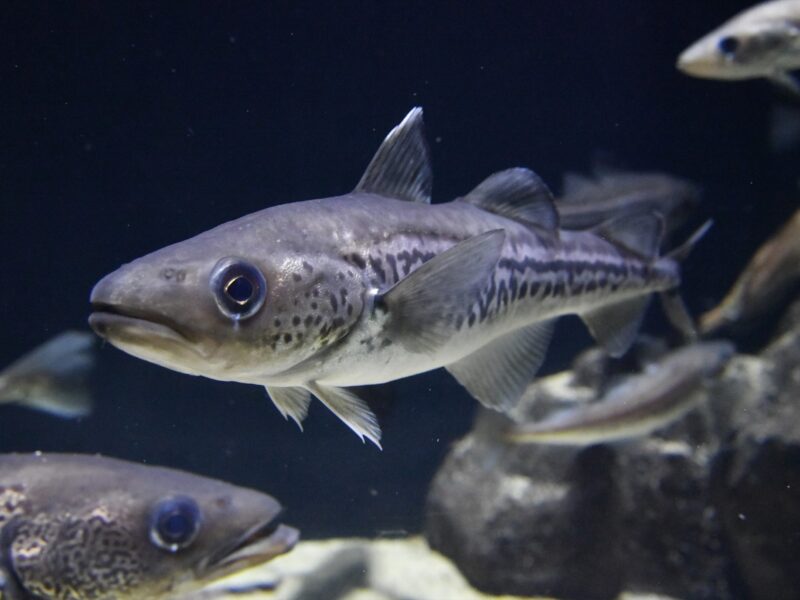
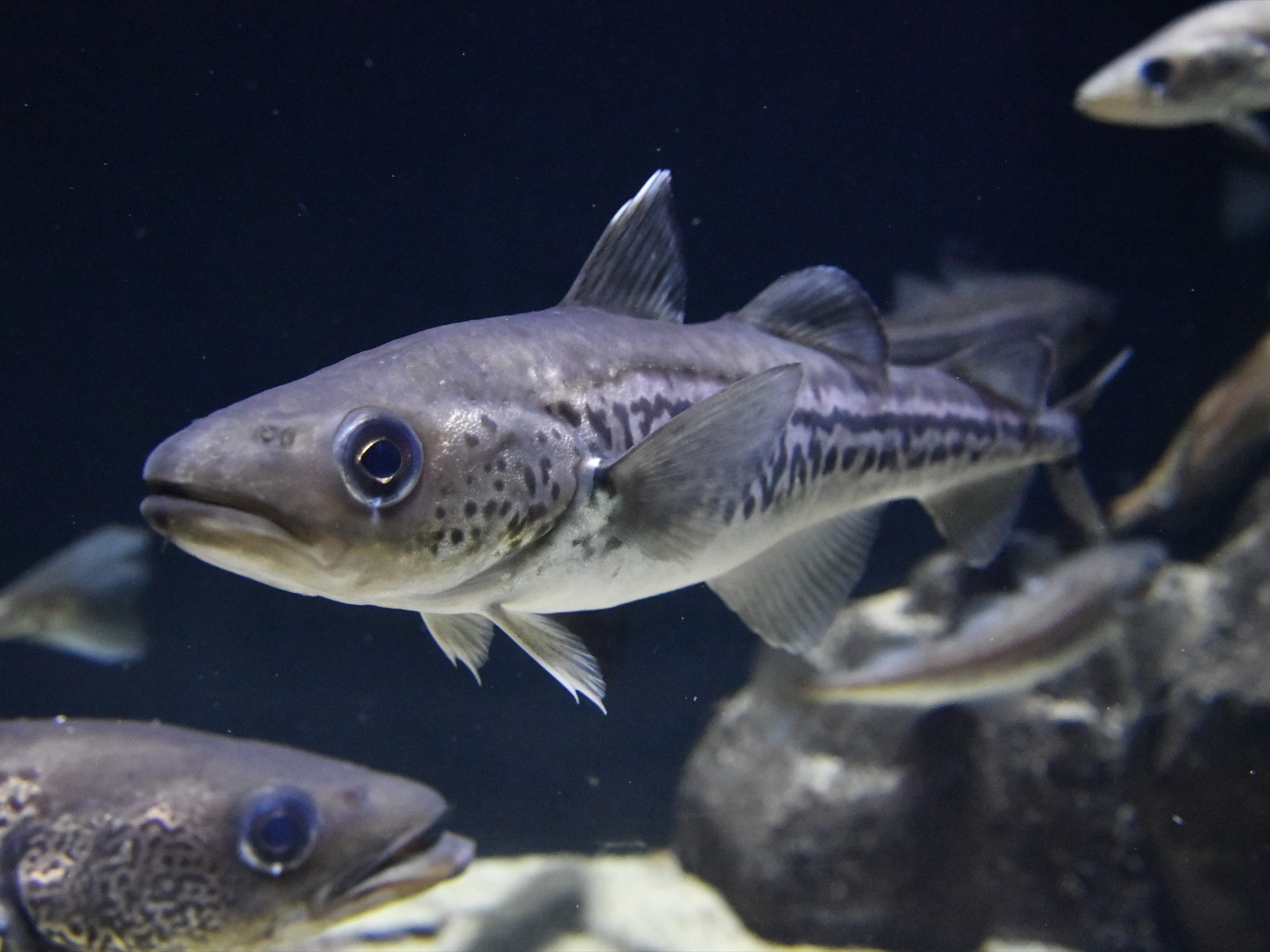
分類:脊索動物門 条鰭綱 タラ目 タラ科 マダラ属
学名:Gadus chalcogrammus
英名:Alaska pollock
漢字:介党鱈、鯳
体長:~80cm
日本海沿岸、茨城県以北の太平洋沿岸に分布、水深0~500mの表中層域から底層に生息する。タラの仲間に特徴的な3基の背ビレと2基の臀ビレをもつ。マダラに似るが、上顎より下顎が突出していること、下顎先端のヒゲが短いことで区別できる。卵巣はいわゆる「たらこ」の原料として重宝される。身は練り製品の原料として使われることが多い。
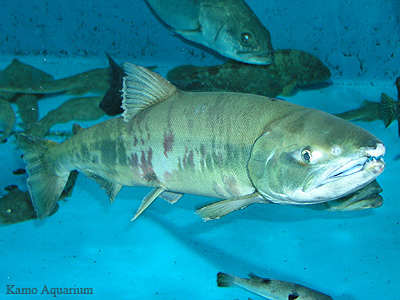
分類:脊索動物門 条鰭綱 サケ目 サケ科 サケ属
学名:Oncorhynchus keta
英名:Salmon
漢字:鮭
体長:~80cm
九州以北の日本海側と利根川以北の太平洋側に分布、索餌回遊域は日本海と北緯42度以北の北太平洋。9~12月に川で産卵し、ふ化した稚魚は4~6月に海に下る。3~4年かけて成長し、また生まれた川に戻り産卵する。「ベニザケ」や「ギンザケ」と区別するため「シロザケ」と呼ぶこともある。
刺身、焼き物、鍋物、汁物、揚げ物、燻製など、どう料理しても美味。卵は筋子やイクラとして賞味する。庄内では塩漬けにしたサケを干したものを「しょんびき」と呼び、冬の間の保存食として食べられてきた。
庄内は全国でも有数のサケ遡上地であり、自然繁殖の他、遡上してきた親魚から採卵し、人工授精による増殖事業も盛んに行われている。加茂水族館では、遊佐町の枡川鮭漁業生産組合の養殖場からサケの稚魚をいただき展示している。
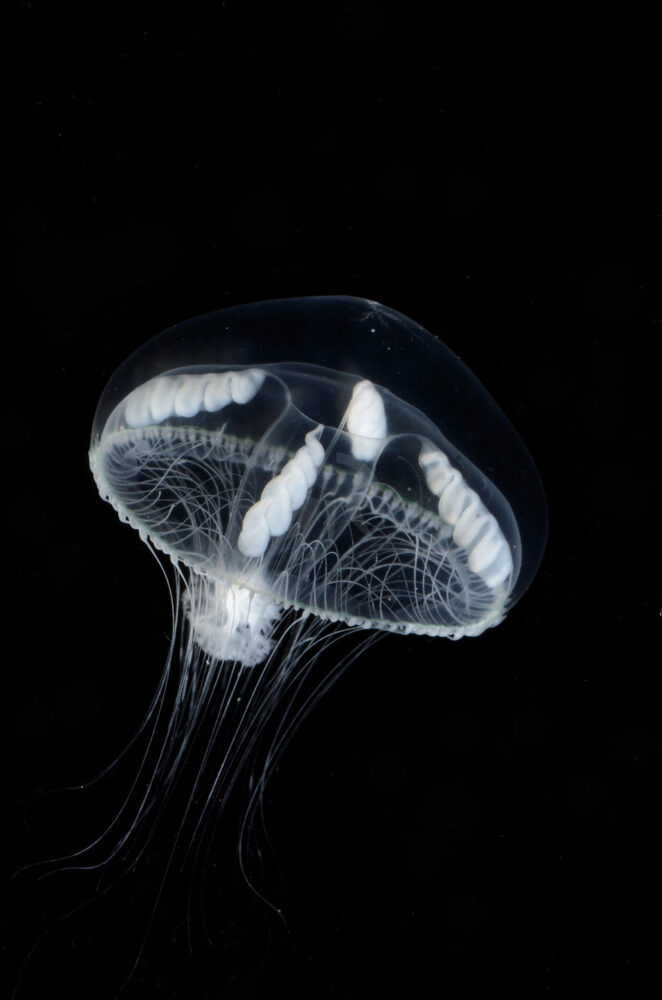
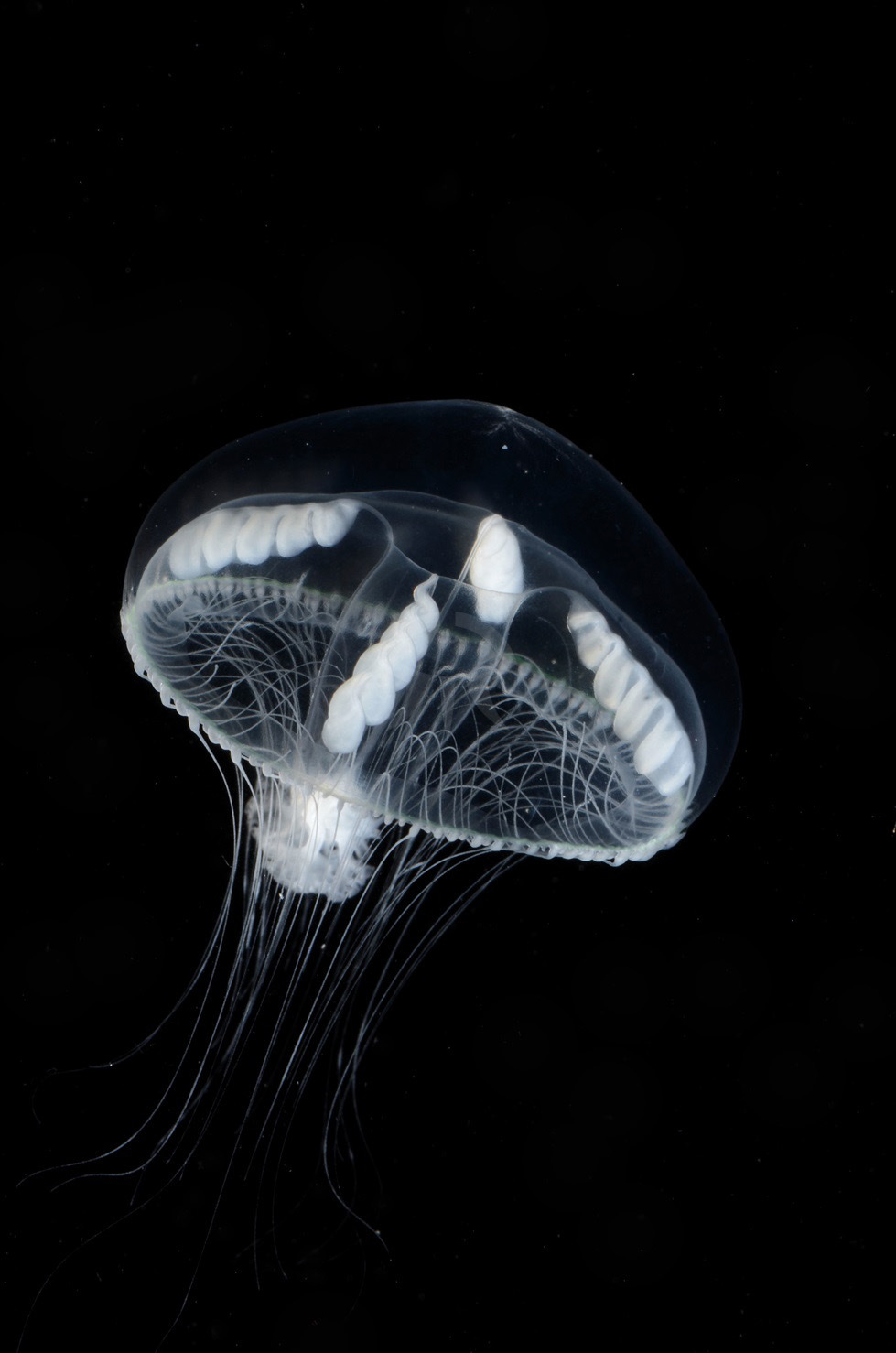
分類:刺胞動物門 ヒドロ虫綱 軟クラゲ目 マツバクラゲ科 シロクラゲ属
学名:Eutonina indicans
英名:Umbrella jellyfish
漢字:白水母
傘径:~40mm
東北以北に分布し、春に見られる。庄内浜では4~5月頃に出現し、時に大量発生し数万個体が狭い範囲に出現することもある。
稚クラゲの時は光を当てると、蛍光緑色が見られるが、成長すると見えにくくなる。
ポリプを10度以下で飼育すると大量にクラゲを出す。成熟すると4本の白い生殖腺が発達し目立つようになる。光に集まる性質(正の走光性)が強く、照明を付けると一斉に光の方向に泳ぎ出す。
This species is distributed north of Tohoku and is seen in spring.
At Shonai Beach in front of Kamo Aquarium, it appears around April to May, sometimes mass-occurring with tens of thousands of individuals appearing in a small area.
When illuminated as a juvenile jellyfish, a fluorescent green color is visible, but this becomes harder to see as it grows.
Keeping polyps at temperatures below 10°C (50°F) induces massive jellyfish production.Upon reaching maturity, four white reproductive glands develop and become conspicuous.
They exhibit strong positive phototaxis, swimming en masse toward light sources when illumination is applied.
※盗用防止のため、写真に当館のロゴの透かしを入れてあります。ご了承ください。
※To prevent unauthorized use, our museum logo has been watermarked onto the photographs. We appreciate your understanding.
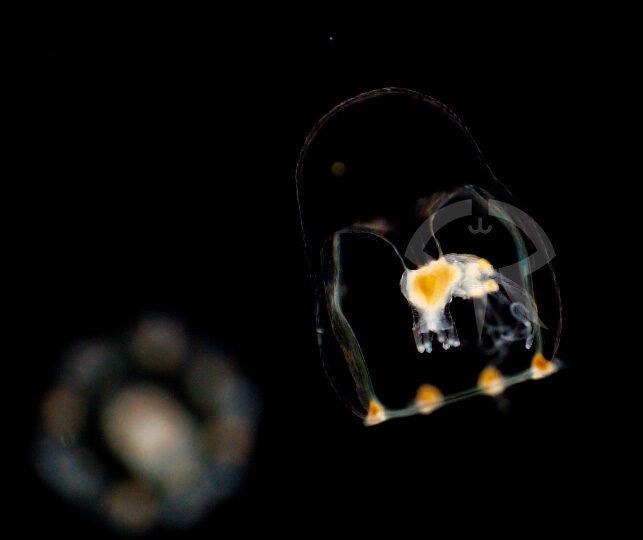
分類:刺胞動物門 ヒドロ虫綱 花クラゲ目 シミコクラゲ科 シミコクラゲ属
学名:Rathkea octopunctata
英名:-
漢字:-
傘径:~5mm
成長しても5mm前後にしかならない小型のクラゲ。親クラゲの口柄の付け根からからクラゲが出芽し、やがて離れて体外に放出され泳ぎ出す(クラゲからクラゲが出てくる)。
放出されたクラゲは成長し数日間でクラゲを作るようになり、一個体いれば1ヶ月後には数百個体に増殖する。
もちろん、クラゲからの出芽の無性生殖だけではなく、受精卵からポリプになり無性生殖、ポリプからのクラゲの放出もある。
日本各地の沿岸に分布し、大量に発生することもある。庄内浜では1~3月の真冬に出現する。
This species is a small jellyfish that only grows to about 5mm even when fully mature.
Jellyfish bud from the base of the parent jellyfish’s proboscis, eventually detaching and being released externally to begin swimming (a jellyfish make a jellyfish).
The released jellyfish grow and become capable of producing more jellyfish within a few days.A single individual can multiply into hundreds within a month.
Of course, reproduction isn’t limited to asexual budding from the jellyfish; fertilized eggs develop into polyps, which reproduce asexually, and polyps also make jellyfish.
They are distributed along coasts throughout Japan and can sometimes appear in large numbers. This species appears at Shonai Beach in front of Kamo Aquarium during the dead of winter, from January to March.
※盗用防止のため、写真に当館のロゴの透かしを入れてあります。ご了承ください。
※To prevent unauthorized use, our aquarium logo has been watermarked onto the photographs. We appreciate your understanding.